
Pregnant women: lung ultrasound detecting respiratory insufficiency
A research article was published by Anesthesiologists and Gynecologists of the Hôpital Nord in June 2014 in Anesthesiology (the American Society of Anesthesia prestigious journal). It suggests that a lung ultrasound would help doctors to determine quickly whether a pregnant woman with pre-eclampsia is at risk of respiratory insufficiency.
About 60,000 women worldwide die from pre-eclampsia, which causes a very high blood pressure. The complications are convulsions, bleeding and excess fluid in the lungs (pulmonary edema) which can lead to respiratory failure. The study suggests that a pulmonary ultrasound can help doctors easily determine if a woman with pre-eclampsia has pulmonary edema and ensure that she receives the proper treatment. This study was conducted by the Department of Anesthesia Reanimation directed by Prof. Marc LEONE in connection with the Department of Obstetric Gynecology led by Professor Léon BOUBLI.
Fast, safe and easy to use
« Pulmonary ultrasound is fast, safe, non-invasive and easy to use » says Professor Marc LEONE, author of the study and head of the department of anesthesia resuscitation at the Hôpital Nord. « Pulmonary ultrasound allowed us to quickly assess whether a pre-eclampsia patient had pulmonary edema and to confirm the severity of the condition. »
Until then, doctors often measured urine flow to determine if a woman needed fluid delivery to the veins, but the results were poor in 50% of the cases. « Lung ultrasound combined with Cardiac ultrasound allow the medical staff to identify women who really need volume expansion » noted Dr. Laurent ZIELESKIEWICZ, lead author of the study.
Vertical white lines
Studying pulmonary ultrasound is easier than cardiac ultrasound and can be performed with the abdominal ultrasound devices that gynecologists commonly use in maternity hospitals.
As soon as water is found in the lungs, a pulmonary ultrasound shows vertical white lines looking like comet tails. The detection of three or more lines strongly suggests the diagnosis of pulmonary edema.
The researchers conducted cardiac and pulmonary ultrasounds both before and after delivery on 20 severe pre-eclampsia patients. Five of the 20 women (25%) had pulmonary edema prior to delivery according to lung ultrasound. Pulmonary ultrasound identified a patient with noncardiogenic pulmonary edema not detected by echocardiography.
This study could lead to better administration of intravenous infusions in patients at risk of pulmonary edema, thus avoiding the occurrence of respiratory distress. In general, women with pulmonary edema are treated with oxygen and a medication in order to lower blood pressure or to clear the body from excess fluid. Moreover, lung ultrasound allows to observe in real time the evolution of pulmonary edema under treatment.
 The Department of Anesthesia Reanimation of the Hôpital Nord takes care of the most serious diseases in subjects at risk
 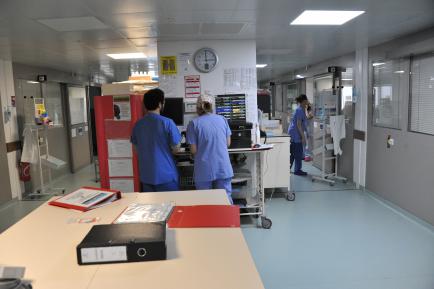 Located in the Pavillon de l'Étoile, it has the most modern and efficient means of resuscitation. It is at the heart of the Traumatology Center, the only one of its kind in the South-East of France
 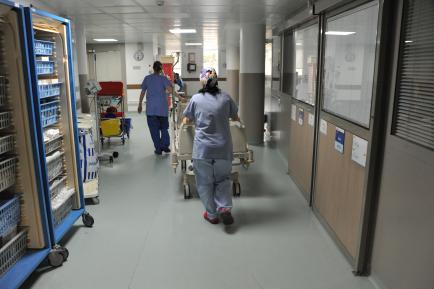 Operation is ensured 24 hours a day with highly specialized multidisciplinary teams and a care path for serious trauma designed to gain precious minutes thanks in particular to a red axis